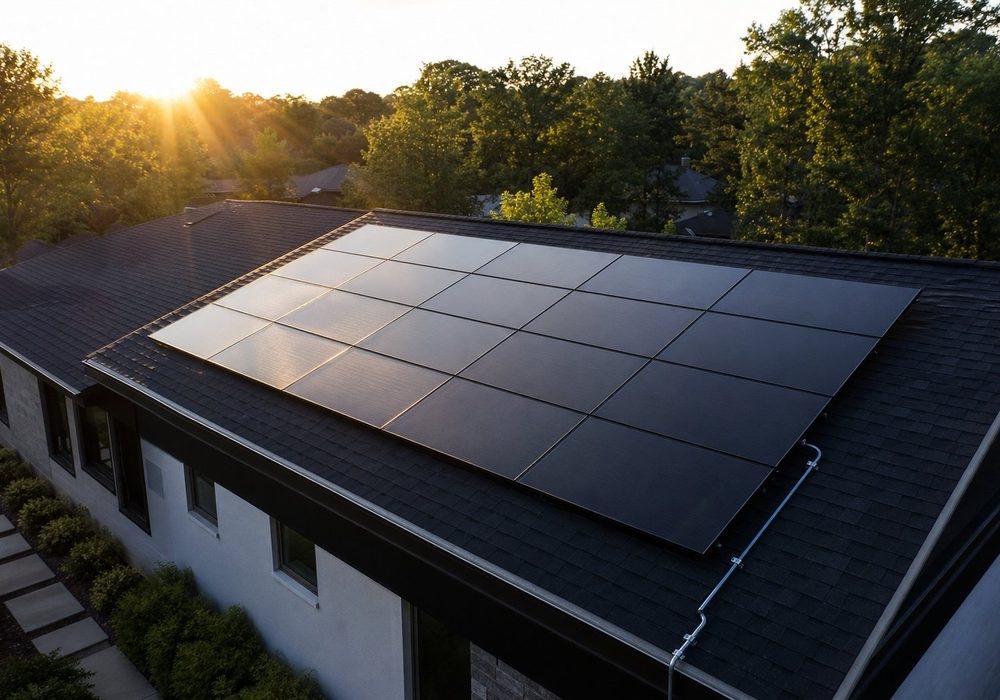
Energy upgrades have a natural order, and getting it wrong is expensive. Mounting panels on a roof that is nearly due for replacement, or fitting windows after the walls have been opened, means paying twice for the same wall.
The good news is that the right sequence is mostly common sense once you think about the house as a system rather than a set of products.
First: understand what your home is actually doing
Before choosing equipment, look at the house honestly. Where does heat leak? Which rooms are cold in the morning? Does the roof have life left in it? Is the attic ventilated properly? Is the glazing single, tired, or draughty at the frames rather than the glass?
A short assessment — visual inspection, thermal imaging where useful, and a look at how you actually use energy — usually points to one or two upgrades that will do most of the work.
Then: the roof, because everything sits on it
A roof is the platform for solar. If it is near the end of its life, it should be addressed first. Panels are removed and reinstalled at real cost, and the removal day is a poor time to discover failing decking.
- Inspect decking and flashing, not just the visible shingles.
- Fix or replace before mounting anything above.
- Plan panel zones and cable routes at the same time as roof work — not afterwards.
- Confirm ventilation, because a well-vented roof keeps the rooms below drier and more stable.
Next: the envelope — windows, doors and the gaps around them
Windows are where most homeowners start, and they are a sensible upgrade — but the installation matters as much as the glazing. Poorly sealed frames leak air no matter how good the unit is.
- Choose glazing for your climate and orientation, not just for a specification sheet.
- Insist on proper sealing, insulation and interior making good.
- Treat doors and thresholds as part of the same envelope.
- Consider noise as well as heat — a quieter home is often the most noticeable upgrade of all.
The unglamorous middle: insulation and ventilation
Insulation and air sealing rarely photograph well, and they are frequently the best value in the whole plan. A tight, well-insulated envelope makes a home more comfortable in both directions and lets you size heating, cooling and solar more modestly.
Last: solar and storage
With the envelope improved, solar becomes a sizing question rather than a hope. Assess orientation and shading, plan panel layout for the roof you have, and be honest about what storage will and will not do for your household.
- Size the system to your real usage pattern, not to a sales target.
- Plan monitoring so the numbers are readable and useful.
- Keep inverter and battery locations accessible and tidy.
- Coordinate permits and inspection as part of the project, not as an afterthought.
Where the paperwork fits
Upgrades arrive with documentation: warranties, permits, inspection sign-offs and product registrations. Keep them together, physically or digitally. When you sell the home, or when a component fails, that folder is worth more than you expect.
A sequence you can hand to a contractor
Survey, roof, envelope, insulation and ventilation, then solar and storage. Within that, phase the work so the house stays dry and the trades do not undo each other. If you want a second opinion on the order for your property, our team is glad to look at it with you.